Entertainment has always been a cornerstone of human culture, offering joy, escapism, and connection. From the earliest forms of storytelling and music to today’s digital streaming platforms and immersive experiences, entertainment reflects societal values, creativity, and technological advancement. In this article, we explore the evolution of entertainment, its modern forms, the technology behind it, its societal impact, and the trends shaping its future.
The Historical Evolution of Entertainment
Human beings have sought entertainment for thousands of years. In ancient civilizations, entertainment ranged from storytelling and theater to athletic competitions and musical performances. Ancient Greeks and Romans built amphitheaters to host plays, musical events, and gladiatorial games, emphasizing both spectacle and social engagement.
During the Middle Ages, entertainment became more community-oriented, with festivals, fairs, and traveling performers. Music, dance, and storytelling were central to cultural life, often reflecting local traditions and values. The invention of the printing press further transformed entertainment by making books, plays, and pamphlets more widely accessible, allowing stories and ideas to travel across regions.
The 20th century marked a dramatic shift with the rise of cinema, radio, and television. Movies became a dominant cultural force, while radio brought music and news into households. Television combined visual and auditory storytelling, creating a shared cultural experience for millions of people worldwide.
The Rise of Digital Entertainment
The digital revolution has redefined the way people consume entertainment. The advent of the internet, smartphones, and streaming technology has made content more accessible, interactive, and personalized than ever before.
Streaming platforms have replaced traditional broadcast schedules, allowing viewers to watch movies, television shows, and live events on-demand. Music streaming has transformed the music industry, giving artists global reach and allowing listeners to explore diverse genres effortlessly. Video-sharing platforms and social media have also turned ordinary users into content creators, giving rise to influencer culture and new forms of entertainment.
Interactive entertainment, such as video games and virtual reality experiences, has further blurred the line between audience and participant. Gamified content engages users actively, offering immersive experiences that combine storytelling, challenges, and social interaction.
Types of Modern Entertainment
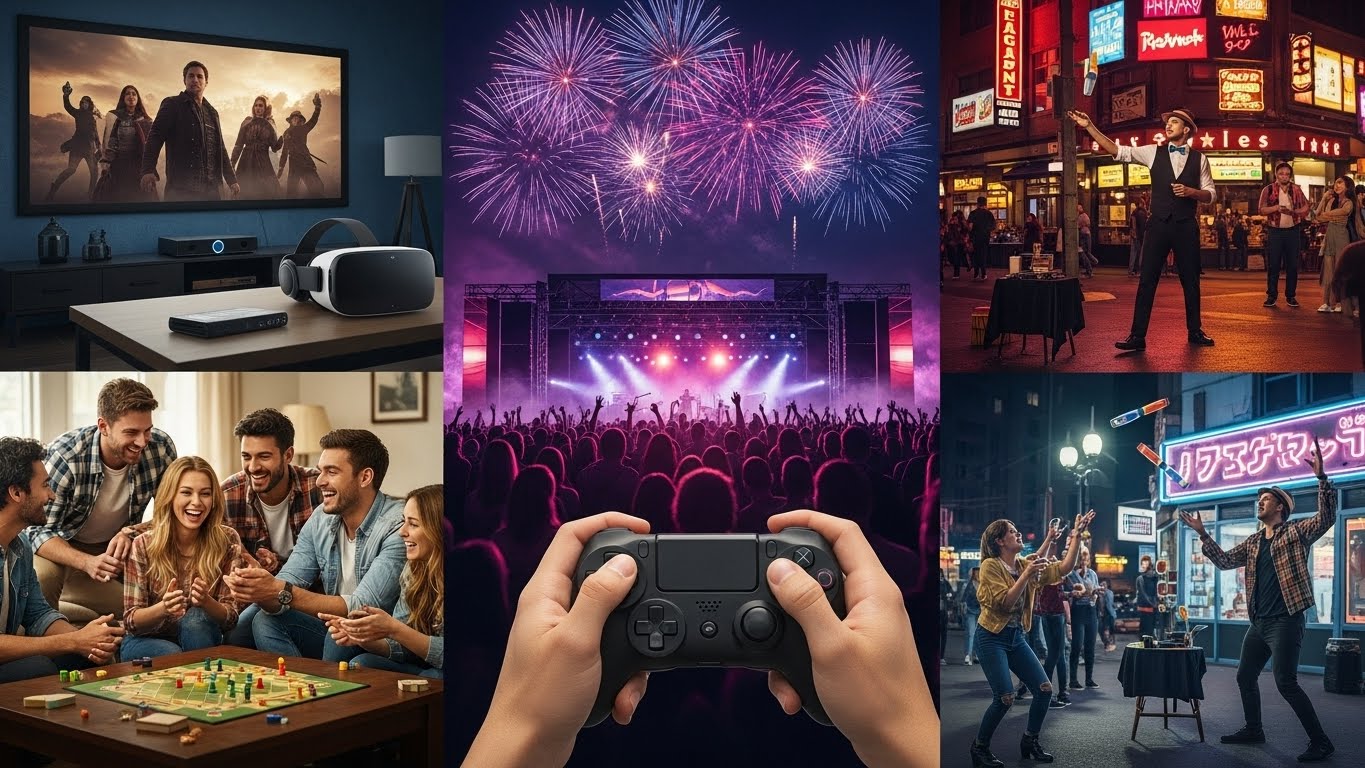
Entertainment today encompasses a wide variety of mediums and formats. Understanding these types highlights the breadth of experiences available to audiences:
1. Film and Television
Film and television remain dominant forms of entertainment. Movies offer cinematic storytelling with rich visuals and complex narratives, while television provides episodic content that allows deeper character development. Streaming platforms have enabled binge-watching culture and increased global accessibility to international content.
2. Music and Performing Arts
Music continues to be a universal form of expression and entertainment. Live performances, concerts, and festivals bring people together, while digital platforms allow music to reach audiences instantly. Performing arts, including theater, dance, and opera, maintain their cultural significance and provide immersive, live experiences.
3. Video Games and Interactive Media
Video games have grown from niche hobby to mainstream entertainment. They combine strategy, storytelling, and skill, often incorporating multiplayer experiences that connect global audiences. Virtual reality and augmented reality enhance immersion, allowing players to step directly into interactive worlds.
4. Literature and Storytelling
Books, novels, and digital storytelling continue to entertain and educate. E-books and audiobooks provide convenient access to literature, while podcasts offer serialized storytelling that engages audiences on the go.
5. Social Media and Online Content
Platforms like video-sharing apps, live streaming, and social networks offer instant entertainment and community engagement. Influencers and creators produce content ranging from comedy and tutorials to documentaries, creating a participatory entertainment ecosystem.
6. Sports and Live Events
Sports events, whether live or broadcasted, are a major form of entertainment. Fans engage emotionally with teams, players, and competitions, while large-scale events like the Olympics or World Cup foster global unity and cultural exchange.
The Technology Driving Modern Entertainment
Technology plays a pivotal role in shaping entertainment experiences. Key innovations include:
1. Streaming and On-Demand Services
High-speed internet and cloud computing enable seamless streaming of video, music, and games. Users can access content on multiple devices without delay, reshaping consumption patterns and expectations.
2. Virtual and Augmented Reality
VR immerses users in fully interactive environments, from gaming and concerts to virtual tourism. AR overlays digital elements on real-world surroundings, creating hybrid experiences for education, gaming, and live events.
3. Artificial Intelligence
AI personalizes entertainment by recommending movies, music, or games based on user behavior. AI also drives content creation, from music composition to dynamic storytelling in video games, enhancing user engagement.
4. Mobile Technology
Smartphones and tablets provide instant access to entertainment anywhere, anytime. Mobile apps offer gaming, streaming, social interaction, and educational content in one device, catering to modern lifestyles.
5. High-Definition Graphics and Sound
Advances in graphics and audio technology have elevated storytelling and immersive experiences. Cinematic visuals, spatial audio, and realistic sound effects enhance user engagement and emotional connection.
The Societal Impact of Entertainment
Entertainment is more than leisure; it significantly influences society, culture, and human behavior.
1. Cultural Expression and Preservation
Entertainment reflects societal values, traditions, and history. Music, theater, and film often explore cultural themes, preserve heritage, and introduce audiences to diverse perspectives.
2. Social Connection and Community
Entertainment brings people together, whether attending a concert, watching a sports event, or participating in online communities. Shared experiences create bonds, foster discussion, and promote social cohesion.
3. Education and Awareness
Entertainment can educate while engaging. Documentaries, educational games, and storytelling platforms raise awareness on social, environmental, and historical issues, combining learning with enjoyment.
4. Mental Health and Wellbeing
Entertainment provides an essential outlet for stress relief, relaxation, and emotional engagement. Music, films, and games can boost mood, reduce anxiety, and support overall mental wellbeing when consumed responsibly.
5. Economic Impact
The entertainment industry is a major economic driver, generating revenue, creating jobs, and fostering innovation. From content production to distribution and live events, the sector contributes significantly to global economies.
Challenges Facing the Entertainment Industry
Despite its growth, entertainment faces several challenges in the modern era:
1. Content Saturation
With the abundance of platforms and content, audiences often experience overload, making it difficult to discover quality entertainment and engage meaningfully.
2. Piracy and Copyright Issues
Digital content is susceptible to unauthorized distribution, impacting revenue for creators and studios. Protecting intellectual property while maintaining accessibility remains a complex issue.
3. Ethical Considerations
Violent or inappropriate content, misinformation, and addictive elements in entertainment media raise ethical concerns. Responsible creation and consumption are essential to mitigate negative impacts.
4. Accessibility and Inclusivity
Ensuring that entertainment is accessible to diverse audiences, including people with disabilities, and representing diverse cultures and perspectives, remains an ongoing challenge.
Emerging Trends in Entertainment
The future of entertainment is dynamic, influenced by technological innovation and changing consumer behavior. Key trends include:
1. Immersive Experiences
Virtual reality concerts, interactive storytelling, and augmented reality events offer unprecedented levels of engagement, allowing audiences to become active participants rather than passive observers.
2. Personalized Content
AI-driven recommendations and adaptive content ensure that entertainment experiences are tailored to individual tastes, enhancing satisfaction and engagement.
3. Integration of Social Media
Entertainment is increasingly intertwined with social media, where content is shared, discussed, and co-created, blurring the lines between creators and consumers.
4. Sustainable and Ethical Practices
Producers are exploring environmentally sustainable production methods and socially responsible storytelling, responding to growing consumer awareness of ethical issues.
5. Globalization of Entertainment
International content is more accessible than ever, allowing audiences to explore diverse cultures and perspectives. Global collaborations between creators are producing innovative and cross-cultural entertainment experiences.
Conclusion
Entertainment is an ever-evolving reflection of human creativity, culture, and technological progress. From ancient storytelling to immersive virtual reality experiences, it has consistently provided joy, connection, and meaning. Modern entertainment spans film, music, games, literature, live events, and digital platforms, offering a variety of ways for people to engage, learn, and connect.
As technology continues to advance, entertainment experiences will become more immersive, interactive, and personalized. While challenges such as content saturation, ethical concerns, and accessibility remain, the industry’s commitment to innovation, cultural expression, and responsible practices ensures its continued relevance.
In a rapidly changing world, entertainment remains a vital part of human life. It inspires creativity, fosters social bonds, educates, and offers a necessary escape from daily stresses. By embracing new technologies, diverse perspectives, and responsible practices, the future of entertainment promises experiences that are richer, more engaging, and universally accessible.