Entertainment has been a cornerstone of human civilization since the dawn of time. From the earliest oral stories told around campfires to the immersive digital experiences of today, entertainment reflects who we are, what we value, and how we connect with one another. It has the power to evoke emotions, spark imagination, and bring communities together. In this blog, we will explore the evolution of entertainment, the current trends shaping it, and its profound impact on society.
The Timeless Power of Storytelling
Storytelling is at the heart of all entertainment. For centuries, humans have used stories to explain the world around them, teach lessons, and share experiences. Ancient myths, folktales, and legends formed the earliest entertainment mediums, serving both to amuse and to educate.
In modern times, storytelling continues to thrive in new forms. Books, movies, television series, podcasts, and video games are all platforms for compelling narratives. Unlike the past, audiences now have the ability to engage with stories in a more immersive way, often choosing how and when they experience them. This shift has pushed creators to innovate, crafting stories that keep audiences hooked while allowing for deeper emotional and intellectual connections.
The Magic of Cinema
Cinema has a unique way of captivating audiences. The combination of visuals, sound, and narrative creates an immersive experience that few other forms of entertainment can match. Watching a film in a theater, surrounded by others, is a communal experience that brings shared laughter, suspense, and tears.
Films also serve as mirrors to society. They explore cultural issues, reflect social dynamics, and sometimes challenge norms. From independent films that tell intimate stories to blockbuster franchises that redefine global pop culture, cinema continues to inspire, entertain, and provoke thought. Even with the rise of streaming services, the cinematic experience remains unparalleled, highlighting the enduring magic of the silver screen.
Television in the Age of Streaming
Television has undergone a remarkable transformation over the past decade. Traditional broadcast TV, once a staple of daily life, has largely been replaced by on-demand streaming services. Audiences can now access vast libraries of content anytime, making viewing habits more flexible than ever before.
This shift has also changed the way stories are told. Series can now explore complex characters and narratives over multiple seasons, and creators are no longer constrained by time slots or advertising schedules. Television has become a dynamic platform that blends entertainment with cultural commentary, making it a central pillar of modern media consumption.
The Rise of Interactive Entertainment
Interactive entertainment, particularly video games, has redefined how we engage with stories. Unlike passive forms of media, games require players to make choices, solve challenges, and actively participate in the narrative. This level of engagement creates a unique connection between the audience and the content.
Online multiplayer games further expand the social dimension of entertainment. Players from around the world collaborate, compete, and form communities, transforming gaming into a global social phenomenon. Virtual reality and augmented reality are taking this even further, offering immersive experiences that blur the line between reality and imagination. The future of entertainment is increasingly interactive, allowing audiences to be co-creators of their experiences.
Music: The Universal Connector
Music has always been a universal form of entertainment, transcending language, culture, and geography. Its evolution mirrors technological advancements, from live performances to vinyl records, cassettes, CDs, and now streaming services. Music connects people emotionally, creating shared experiences that resonate across generations.
Today, music consumption is more accessible than ever. Streaming platforms allow listeners to explore new genres and discover emerging artists. Social media offers a direct channel between musicians and their audience, creating a sense of intimacy and community. Festivals, concerts, and live performances remain powerful experiences where music, visuals, and human connection converge, proving that the art form’s appeal is timeless.
Social Media as Entertainment
Social media has become a dominant force in shaping contemporary entertainment. Platforms allow creators, influencers, and everyday users to reach global audiences instantly. Short-form videos, viral trends, and memes have emerged as legitimate forms of entertainment, capturing attention in seconds and generating cultural impact.
The democratization of content creation means that anyone with a smartphone can become an entertainer. This shift has disrupted traditional media hierarchies and opened the door for diverse voices and perspectives. Social media’s influence extends beyond entertainment, shaping trends, conversations, and even societal values.
The Role of Technology in Entertainment
Technology and entertainment have always evolved together. Advances in visual effects, sound design, and interactive platforms have transformed how stories are told and experienced. Emerging technologies like virtual reality, augmented reality, and artificial intelligence are creating entirely new forms of entertainment.
Artificial intelligence assists in generating music, editing films, and even designing game environments. Virtual reality immerses users in lifelike experiences, from exploring fantastical worlds to participating in simulations. As technology continues to evolve, the possibilities for entertainment are virtually limitless, allowing creators to push the boundaries of imagination and audience engagement.
Live Entertainment and Human Connection
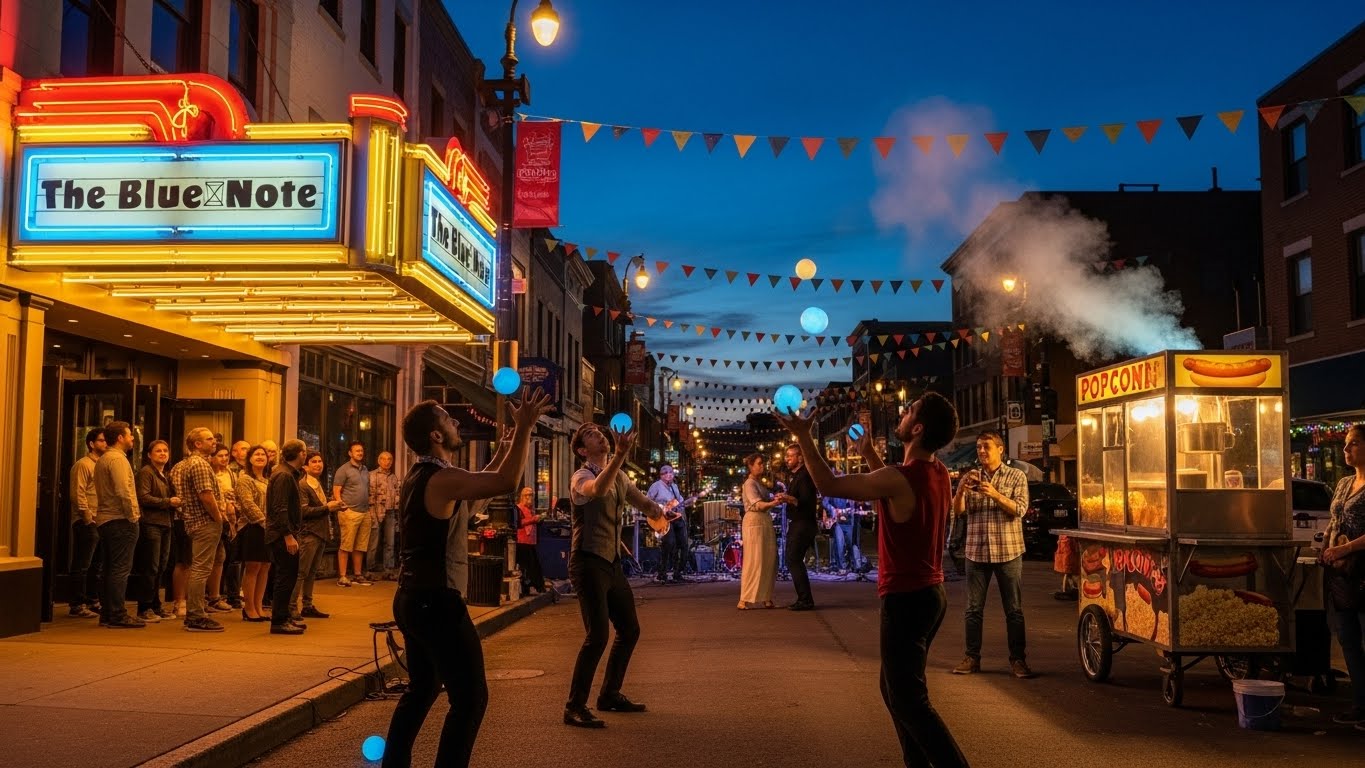
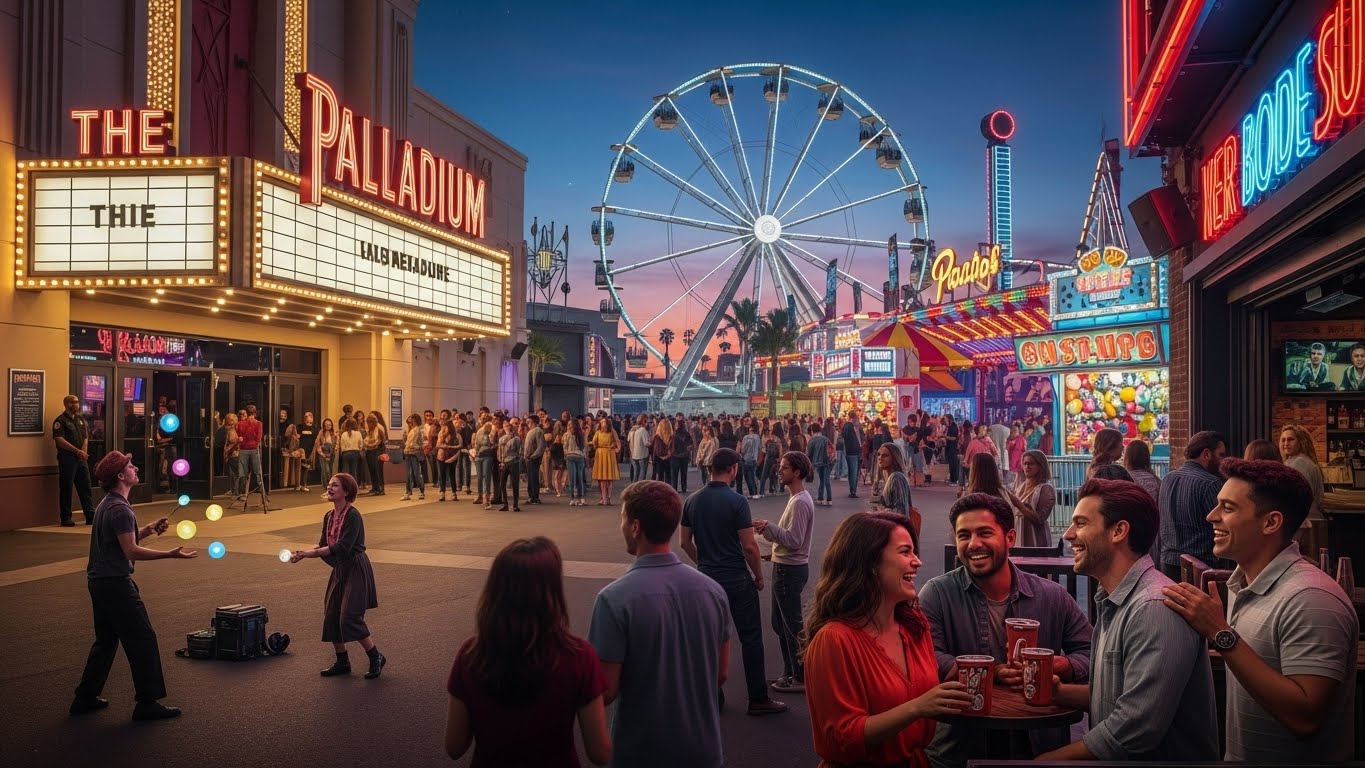
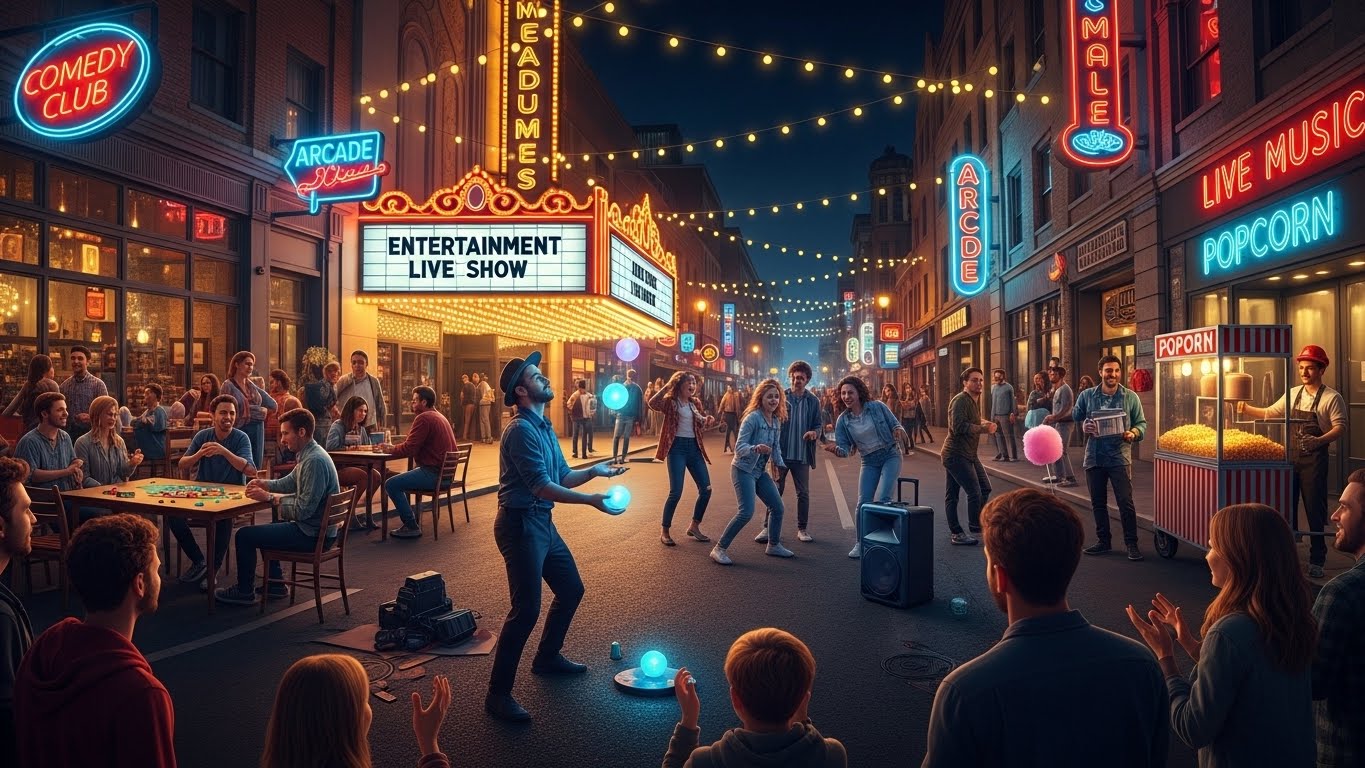
Despite the growth of digital media, live entertainment remains irreplaceable. Concerts, theater performances, sports events, and festivals offer experiences that screens cannot replicate. The energy of a live audience, the unpredictability of performance, and the collective emotional highs create lasting memories.
Live entertainment also fosters community. Festivals and events celebrate art, culture, and tradition, bringing people together and promoting social interaction. In an increasingly digital world, the value of shared, real-world experiences has become even more significant, reminding us of the human need for connection.
Entertainment as a Reflection of Society
Entertainment is more than a source of amusement; it is a reflection of cultural values and social norms. Through films, music, television, and games, society expresses its fears, aspirations, and beliefs. Entertainment can challenge existing paradigms, inspire change, and encourage empathy by exposing audiences to different perspectives.
Moreover, entertainment provides psychological benefits. It offers escapism, helping individuals temporarily step away from daily stress, while also fostering creativity, inspiration, and emotional growth. The power of entertainment lies in its ability to balance pleasure with meaning, delight with reflection.
Current Trends Shaping Entertainment
Several trends are redefining the landscape of entertainment. Personalized content, driven by algorithms and data, ensures that audiences receive experiences tailored to their preferences. Cross-platform storytelling has also become popular, with narratives spanning movies, books, games, and digital content, creating expansive entertainment universes.
Inclusivity and diversity are increasingly emphasized in entertainment, with audiences demanding representation across gender, ethnicity, and culture. Sustainability is another consideration, as creators strive to minimize environmental impact in production processes. Nostalgia remains a powerful trend, with reboots, remakes, and adaptations connecting generations to beloved stories from the past.
The Future of Entertainment
The future of entertainment promises unprecedented innovation. Advances in technology, storytelling, and audience engagement will continue to blur the boundaries between reality and imagination. Audiences will play an increasingly active role, co-creating content and shaping narratives. Virtual experiences, AI-driven entertainment, and interactive storytelling will redefine how we perceive and enjoy media.
As the world evolves, entertainment will continue to reflect human creativity, emotion, and culture. Its ability to inspire, connect, and captivate will remain timeless, proving that no matter how technology changes, the desire for amusement, engagement, and shared experience will never fade.
Conclusion
Entertainment is an ever-evolving mirror of human culture, technology, and imagination. From ancient stories to modern interactive experiences, it shapes our emotions, our perspectives, and our social connections. Music, cinema, television, games, and live performances each offer unique ways to engage, escape, and connect with the world around us.
In a rapidly changing landscape, entertainment adapts, innovates, and grows, continually offering new experiences and challenges. Its impact on society is profound, providing joy, inspiration, and reflection. As we look to the future, entertainment will continue to surprise and delight, reminding us that the human desire for stories, music, and shared experiences is universal, timeless, and unbreakable.