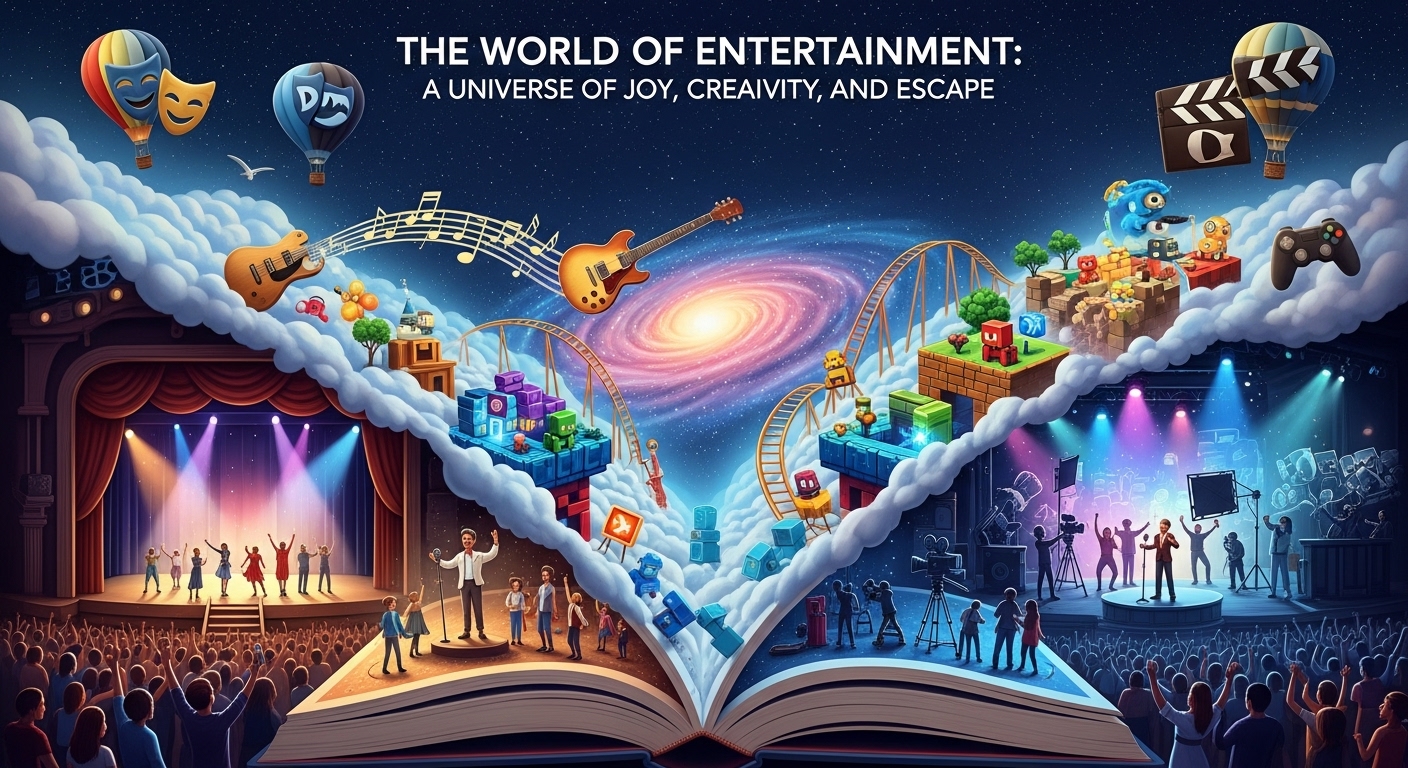
Entertainment has always been an essential part of human life. From the earliest civilizations to the modern digital era, people have sought ways to amuse, inspire, and connect with one another. Whether it’s through music, theater, film, dance, or the latest social media trends, entertainment continues to shape cultures and influence societies. What makes entertainment fascinating is how it constantly evolves—adapting to new technologies, social changes, and creative ideas. This dynamic industry never stands still, and that’s what keeps audiences engaged and eager for more.
The Roots of Entertainment
The story of entertainment begins thousands of years ago. In ancient times, entertainment was often tied to rituals and traditions. Early humans gathered around fires to share stories, sing songs, and perform dances. These gatherings weren’t just for fun—they were ways of bonding, passing down knowledge, and celebrating life. As societies developed, so did their forms of entertainment. Ancient Egyptians enjoyed music and drama, while the Greeks built magnificent theaters to stage plays that explored human emotions, politics, and mythology.
In Rome, entertainment became more extravagant with gladiatorial games and chariot races, attracting thousands of spectators. Although these events were brutal, they showed how people were drawn to spectacles and performance. Across different civilizations, entertainment reflected the values, beliefs, and priorities of the time. Whether it was a tribal dance or a grand royal concert, entertainment was always a mirror of society.
The Golden Age of Performing Arts
As time moved forward, the Middle Ages and Renaissance brought a revival of performance and creativity. Street performers, jesters, and traveling troupes entertained towns and villages. With the invention of stage plays and operas, entertainment began to take a more structured form. The Renaissance, in particular, was a period of artistic explosion. Music, theater, and visual arts flourished, laying the foundation for what would become the modern entertainment industry.
Theaters such as Shakespeare’s Globe in London became cultural landmarks, where people from all walks of life gathered to enjoy performances. Drama wasn’t just entertainment—it was education, commentary, and reflection. The performing arts became a tool to express ideas, challenge norms, and explore human experiences. The art of storytelling had evolved from oral traditions into something more elaborate and impactful.
The Birth of Cinema and Modern Entertainment
The invention of film in the late 19th century marked one of the biggest revolutions in entertainment history. Moving pictures changed everything. What began as short, silent films soon evolved into a powerful storytelling medium. By the early 20th century, cinema had become a global phenomenon. Movies offered escapism during difficult times, such as the Great Depression, and also gave people shared experiences that transcended language and culture.
The rise of Hollywood transformed entertainment into a massive industry. Stars like Charlie Chaplin, Marilyn Monroe, and Humphrey Bogart became global icons. Filmmakers like Alfred Hitchcock and Walt Disney pushed creative boundaries, experimenting with new genres, animation, and special effects. Cinema was not just about watching a story—it became a way of feeling emotions deeply and immersing oneself in another world.
The Influence of Music in Entertainment
Music has always been a universal language. It has the power to unite people, express emotions, and inspire movements. From classical symphonies to rock concerts and pop albums, music has evolved in countless forms. The 20th century witnessed a musical revolution with the birth of jazz, rock and roll, hip-hop, and electronic music. Each genre brought with it a new cultural identity and social impact.
Musicians became icons of change. The Beatles, Elvis Presley, Bob Dylan, and Michael Jackson were not just entertainers—they were cultural forces. Music videos, introduced with the rise of television, added a visual dimension to sound, creating new ways for artists to express their creativity. Live performances became grand spectacles, where audiences connected not just with the music, but with the energy and emotion of the moment.
The Digital Transformation of Entertainment
With the rise of the internet, entertainment entered a new era. The digital revolution changed how we create, distribute, and consume content. Streaming platforms, social media, and mobile technology gave people instant access to movies, shows, music, and games from anywhere in the world. The power of entertainment shifted from a few big studios to millions of creators who could reach audiences directly.
Platforms like YouTube, TikTok, and other digital spaces turned ordinary individuals into celebrities. The definition of entertainment expanded—vlogs, memes, short videos, and live streams became new forms of amusement. The audience was no longer passive; they became active participants in the entertainment process. Interactivity and engagement became key to success.
The Rise of Gaming as Entertainment
Video games, once seen as simple pastimes, have become one of the most dominant forms of entertainment. The gaming industry now rivals movies and music in both revenue and influence. Games are no longer just about competition—they are immersive worlds filled with stories, art, and emotion. Titles like role-playing adventures and open-world games have turned players into explorers and storytellers.
Esports, the competitive gaming scene, has also created a new kind of celebrity: the gamer. Professional players and streamers attract millions of viewers, and tournaments fill entire arenas. Gaming communities have grown into global networks where people connect, collaborate, and celebrate their shared passion. This interactive entertainment form represents the future, blending technology, art, and human creativity.
Television and the Evolution of Storytelling
Television has been another major pillar of entertainment for decades. From family sitcoms to intense dramas and reality shows, TV has shaped the way people experience stories. In the mid-20th century, television became the centerpiece of every home. Families would gather around the screen to watch news, shows, and live events, creating shared moments that defined generations.
In recent years, streaming services have changed the landscape. The idea of scheduled programming has given way to on-demand viewing, where audiences can binge-watch entire seasons at once. This shift has also encouraged creators to explore more complex narratives, diverse casts, and global themes. Series from different cultures now reach worldwide audiences, showing that storytelling has truly become universal.
The Power of Celebrity and Influence
Entertainment is not just about the art—it’s also about the people behind it. Celebrities have always held a special place in the public’s imagination. From movie stars to musicians and social media influencers, these figures shape trends, opinions, and even lifestyles. The fascination with fame has existed for centuries, but the modern age has amplified it like never before.
Social media allows fans to connect directly with their favorite stars, breaking down barriers between audience and artist. This accessibility has created new forms of influence, where personalities can impact fashion, politics, and culture with a single post. However, fame also brings challenges—scrutiny, pressure, and the struggle to maintain authenticity. Despite that, the allure of celebrity remains one of entertainment’s most powerful forces.
Cultural Diversity in Entertainment
One of the most beautiful aspects of modern entertainment is its diversity. With globalization and technology, audiences have access to content from every corner of the world. International films, music, and art are no longer confined by borders. Korean pop music, Indian cinema, Latin dance, and African art forms have found global appreciation. This cultural exchange enriches the entertainment landscape, making it more inclusive and dynamic.
Diversity in entertainment also extends to representation. Audiences now demand stories that reflect real experiences, identities, and perspectives. The push for inclusivity has encouraged filmmakers, writers, and producers to tell stories that resonate with a wider range of people. This shift not only promotes understanding but also ensures that entertainment remains relevant and reflective of the world we live in.
The Role of Technology in Shaping the Future
Technology continues to redefine what entertainment means. Virtual reality, augmented reality, and artificial intelligence are pushing boundaries like never before. Virtual concerts, immersive games, and interactive films allow audiences to experience entertainment in entirely new ways. The line between reality and imagination is blurring, creating a future where participation becomes part of the story.
Artificial intelligence is also transforming content creation. From automated music composition to AI-generated films, technology is expanding creative possibilities. While some fear that machines might replace artists, the truth is that technology often enhances human creativity, offering tools to explore new artistic horizons. The key lies in balance—using technology to amplify imagination rather than replace it.
The Emotional Impact of Entertainment
Beyond all its forms and technologies, the true power of entertainment lies in its ability to move people emotionally. Whether it’s laughter, tears, excitement, or inspiration, entertainment connects directly with human feelings. A good movie, song, or performance can change someone’s mood, provide comfort, or spark motivation. During difficult times, entertainment offers escape and hope. During celebrations, it becomes a source of joy and togetherness.
This emotional connection is what makes entertainment timeless. It reminds us of our shared humanity and allows us to experience life from different perspectives. It can challenge beliefs, inspire empathy, and even spark social change. That’s why entertainment isn’t just a luxury—it’s a vital part of human existence.
The Business Behind the Fun
Behind every piece of entertainment lies a massive industry. From film studios and record labels to game developers and streaming platforms, countless professionals work to create and distribute content. The entertainment business drives economies, creates jobs, and shapes consumer trends. It’s not just about creativity—it’s also about strategy, marketing, and innovation.
However, the industry faces challenges such as piracy, competition, and changing audience habits. The rise of digital content has disrupted traditional models, forcing companies to adapt quickly. Success in the entertainment world now depends on understanding audience preferences, embracing new technology, and maintaining authenticity in an increasingly commercial space.
The Endless Journey of Entertainment
Entertainment is a reflection of life itself—ever-changing, diverse, and full of stories. From ancient performances to digital realities, it continues to evolve with each generation. What remains constant is the human desire to feel, connect, and express. No matter how advanced technology becomes, the heart of entertainment will always be about emotion, creativity, and connection.
As we look toward the future, one thing is certain: entertainment will never lose its place in our lives. It will continue to adapt, surprise, and inspire. Whether it’s through a song that touches our soul, a film that makes us dream, or a game that lets us explore new worlds, entertainment will always be our companion in the journey of life.
Conclusion
The world of entertainment is vast and vibrant, encompassing countless forms of art and expression. It tells stories that reflect who we are and who we aspire to be. From the first rhythm beaten on a drum to the latest virtual concert in the metaverse, entertainment remains a universal language of joy, imagination, and connection. As we move into the future, it will continue to evolve—but its purpose will remain the same: to entertain, inspire, and unite humanity.